
How Paul Invented the Forgiveness of Sins

Updated: Jul 6

In my first New Testament class at Princeton Theological Seminary, I was introduced to the idea that, of the thirteen letters attributed to the Apostle Paul, only seven were written by him. The list generally looks like this according to the scholar Raymond Brown:
Written by Paul
1 Thessalonians – 51 CE
Galatians – 55 CE
1 Corinthians – 56 CE
Philemon – 56 CE
2 Corinthians – 57 CE (compilation of several of Paul’s letters)
Romans – 58 CE
Philippians – 60 CE (compilation of several of Paul’s letters)
Written by Paul’s Disciples
Colossians – 80 CE
Ephesians – 95 CE
2 Thessalonians – 95 CE
Titus – 100 CE
1 Timothy – 100 CE
2 Timothy – 100 CE
What my professors did not tell me in seminary, but I learned later, is that none of the authors of the documents in New Testament knew Jesus during his lifetime, this includes Paul.
Paul is the only writer in the New Testament who encountered the resurrected Jesus and who interacted with Jesus’ original disciples. No other New Testament author can be verified to have witnessed the resurrection or to have known Jesus' original disciples.
Take that in for a moment.
This means books like the Acts of the Apostles (which walk through the events of the early church) lack historical veracity and cannot be trusted. Paul is the closest, most reliable source we have for understanding how Jesus’ original disciples viewed Jesus and his messiahship.
Paul’s Conflict with Jesus’ Disciples
We know from Paul's letters that he did not get along with the three main leaders in the church—James, Peter and John. (see Galatians 1-2)
One of the primary reasons for this conflict was their differing views on exactly what Gentiles (non-Jews) should do to become part of Jesus’ movement.

James (Jesus’ brother and the leader of the Jerusalem church) said that any Gentile converts were required to become Jewish first and foremost. This meant circumcision for males and eating kosher for all genders.
Paul disagreed. He believed to be part of Jesus’ movement all one needed was faith in Jesus. Circumcision and kosher dietary restrictions should be taken off the table.
Why? Because Paul was dealing with practical considerations. Circumcision was off-putting to Greco-Roman men in ways that are hard to overstate. Moreover, Torah kosher requirements created significant social barriers.
Paul’s law-free gospel removed these barriers and made entry into the Jesus movement accessible to a vastly larger population.
Yet, even beyond these two major hurdles was a third issue Paul faced when convincing Gentiles that Jesus was worth following—the cross.
Executed for Treason
If you lived in the Roman Empire during the 1st century CE, you were well aware that crucifixion by the Roman government was reserved for extreme political crimes: treason, sedition, rebellion or banditry.
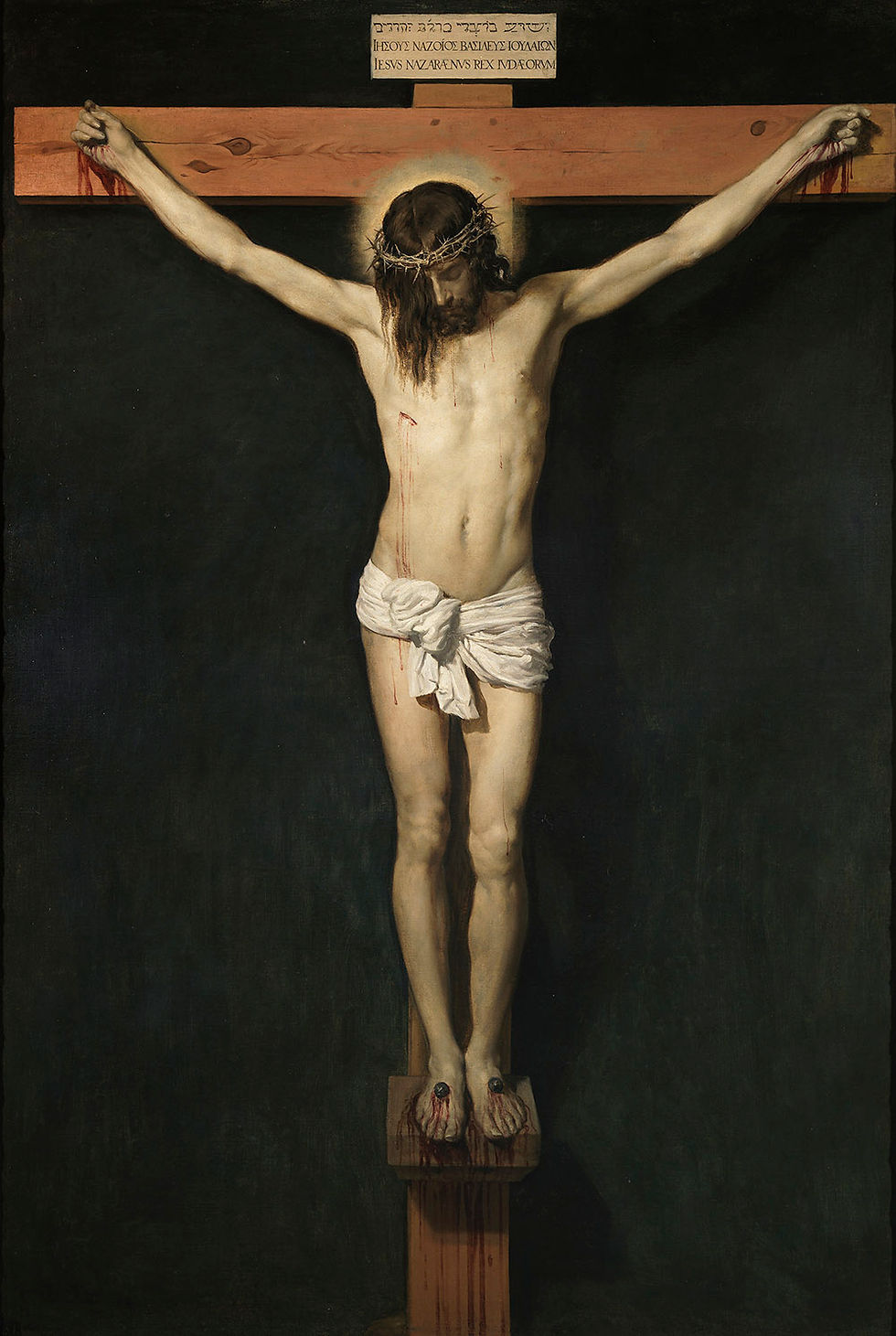
Jesus was convicted of treason, which is the crime of betraying one’s country, typically by attempting to overthrow the government.
This might seem like an odd accusation to level against Jesus, but it makes sense when you understand that a messiah in Jewish culture is someone with kingly ambitions.
Anyone convicted of a crucifiable offense was not someone to be emulated. Given that the accused’s associates could potentially be crucified as well, aligning yourself with a criminal was a death wish.
Even among the Jews, Jesus’ crucifixion was a hard sell. Deuteronomy 21:23 states that “cursed is everyone who hangs on a tree”.
To overcome the stigma, Paul innovated. The name of the game was reframing Jesus’ crucifixion by reinterpreting the scriptures.
Retrofitting Jesus into the Law and the Prophets
For those steeped in Jewish scripture, Paul argues in Galatians 3:13 that Christ became a curse for us, so that the curse might be overcome.
For those operating within a broader Greco-Roman sacrificial framework, Paul inserts Jesus into the Suffering Servant tradition of Isaiah 53: Jesus, like the suffering servant, is sacrificed for the forgiveness of sins.
In other words, Paul created the theology of interpreting Jesus’ death on the cross as forgiving our sins.
In fact, when the gospel authors write about Jesus’ blood “poured out for the forgiveness of sins,” (Mt. 26:28) they are writing after Paul’s letters had already circulated widely throughout early Christian communities.
The forgiveness framework was Paul’s first. The gospel authors absorbed it, and then, as was standard practice in ancient religious writing, placed it on Jesus’ lips to authorize it.
Paul, not Jesus, originated this interpretation. Jesus never made this declaration himself.

We know this because, even as late as the second century, figures like Bishop Irenaeus of Lyon (140-202 CE) developed an influential account of Jesus’ salvation (better known as recapitulation) in which Christ restores humanity by living the perfect obedient life that Adam failed to live.
In Irenaeus’ framework, the crucifixion is not the mechanism of forgiveness, it’s simply how Jesus dies. It was not until Anselm of Canterbury in the eleventh century that substitutionary atonement became the orthodox standard.
Yet, as much as Paul was innovating to meet the demands of his audience, there has always been a truly remarkable aspect to Paul’s theology: He develops the forgiveness of the cross decades before the destruction of the Jerusalem Temple in 70 CE.

Once the Temple had been destroyed, animal sacrifices could no longer be offered to God, making Jesus an optimal substitute for obtaining forgiveness.
How could Paul have possessed such foresight?
Did he realize how perfectly his theology would counterbalance the end of the sacrificial system in Judaism?
No, he did not.
That’s because offering the forgiveness of sins outside the Temple system wasn’t originally his idea.
A Pharisee among Pharisees
In Philippians 3:5, Paul describes himself as a member of the sect of Pharisees. He brags in Galatians 1:14 that he was “advanced in Judaism beyond many among my people of the same age, for I was far more zealous for the traditions of my ancestors.”
The Pharisees formed as a group around 150 BCE. What set the Pharisees apart from the other Jewish sects was their focus on education. They wanted to make sure the average Jew was as educated as possible about their faith.
To achieve this mission, they would make themselves a presence in local synagogues and would offer to tutor and train anyone who wanted to take their faith seriously.
The word synagogue simply means house of prayer. Synagogues were constructed in villages and cities where Jews were unable to travel to the Temple in Jerusalem to worship God.

It’s similar to how local churches work in Catholicism. The local church is where you go because you can’t make it to the Vatican in Rome every Sunday. In other words, the local synagogue acted as a substitute for the Jerusalem Temple.
When the Temple was destroyed in 70 CE and the Jews could no longer travel to Jerusalem to worship God, Judaism naturally reestablished itself in the synagogues.
Most Jews were already worshipping in the synagogues, so the major shift was being unable to travel to Jerusalem for the high holy days.
Therefore, when the focus of Judaism shifts to the local synagogue, who’s already there, teaching and training the people? The Pharisees, of course.
With all the other sects having been wiped out with the destruction of Jerusalem, the only version of Judaism left was the Pharisees. If you know anyone who is an Orthodox Jew today, their direct ancestral line can be traced back to the Pharisees.
The Debate about Animal Sacrifice
At the turn of the first century CE, there was a very robust debate developing among the Pharisees as to whether God still required the Jews to sacrifice animals to receive forgiveness.
This debate started because every priest who worked in the Temple was vetted by Rome and was expected to be loyal to Rome’s interests.
Since the Torah has strict purity requirements around the sacrifices, the Pharisees posed a question: If the priests performing the sacrifices are corrupt, then the purity of the sacrifices themselves have been corrupted, which begs the question as to whether God counts them?

If that’s the case, then perhaps God can simply forgive without animal sacrifice?
By the time Jesus was crucified (≈30 CE), the Pharisaic movement was relocating the site of holiness from the temple to the Torah study community, from priestly sacrifice to everyday practice, from Jerusalem to wherever Jews gathered around the text.
The synagogue system was creating a portable, decentralized Judaism that did not fundamentally require the Temple to function.
This trajectory, which had been percolating beneath the surface of Judaism for decades, became explicit in rabbinic Judaism after 70 CE.
Paul’s Innovation: Jesus as the Sacrifice that Forgives Everyone
This brings us back to Paul who originally associated with the Pharisees before his conversion.
As a Pharisee, Paul would have been well aware of this debate. He knew the Temple system was falling out of favor. The Pharisees were already relocating atonement around Torah study and acts of loving kindness as a replacement for sacrifice.
When Paul linked Jesus’ crucifixion to the forgiveness of sins, he was taking advantage of a theological critique that was already widespread.
The Pharisees were offering alternatives to animal sacrifice and Paul, being a Pharisee, offers his own alternative to animal sacrifice through Jesus’ death and resurrection.

What we know is that Paul’s alternative was attractive to Gentiles and Jewish-Gentiles living beyond the borders of Palestine. With Jesus, they could obtain forgiveness from God without travelling to Jerusalem or performing animal sacrifices.
What Paul could not have anticipated was how the destruction of the Temple in 70 CE would supercharge his theology.
Once the Temple was leveled by the Roman army and animal sacrifice became impossible, Paul’s theological alternative of Jesus being sacrificed for the sins of the world becomes a relevant alternative that Christians believe was preordained.
In reality, Paul was simply doing what all the Pharisees were doing at that time—trying to find alternatives to a corrupt Temple system that no longer reflected the Torah law.
The Corinthians Contradiction
Many who know the scriptues well will point out what Paul says in 1 Corinthians 15: "For I handed on to you as of first importance what I in turn had received: that Christ died for our sins in accordance with the scriptures..." (1Co. 15:3)
Many scholars believe that this sentence points to a creed being passed around by the early church that Paul inherited from Jesus' disciples. In other words, this scripture undercuts my entire argument. If Paul "learns" about the forgiveness of sins from this creed, then there is no "invention" taking place.
Yet, there is good reason to believe 1 Corinthians 15:3 is being misinterpreted.

When James (Jesus' brother and leader of the Jerusalem church) finds out Paul has been promoting a law-free gospel, James dispatches missionaries to Paul's churches to speak against Paul's gospel. This is the impetus for Paul writing his letter to the Galatians.
Galatians 1:11-12 is unambiguous: "I want you to know, brothers and sisters, that the gospel I preached is not of human origin. I did not receive it from any man, nor was I taught it; rather, I received it by revelation from Jesus Christ."
Then in Galatians 1:16-17 he doubles down: "I did not confer with any human being, nor did I go up to Jerusalem to those who were already apostles before me, but I went away at once into Arabia, and afterwards I returned to Damascus."
These scriptures are evidence of how badly Paul wants to distance himself from the original disciples.
Those who argue that Paul "received" the gospel from the original disiples (including the concept of the cross forgiving sins) based on his description from 1 Corinthians 15 are ignoring what he writes in Galatians 1 (which predates 1 Corinthians).
Paul is specific that his gospel came not from any human being but directly from Jesus Christ by revelation, and that he deliberately avoided the Jerusalem apostles for years after his conversion.
If we take the 1 Corinthians 15 language as evidence that Paul received his atonement theology from the early Jerusalem community, we have to explain why Paul himself so emphatically denies receiving his gospel from any human source.
You cannot use his transmission language in one letter to establish human origin while ignoring his explicit denial of human origin in another. The tension is Paul's, not mine.
If we read 1 Corinthians 15:3 through the lens of Paul's words in Galatians, then the source of his atonement theology would come from the resurrected Jesus, not the disciples.
This would mean the idea that Jesus died on the cross for the forgiveness of sins is Paul's and Paul's alone.
Conclusion: Forgiveness Abounds
The opening verses of Mark’s gospel states: John the baptizer appeared in the wilderness, proclaiming a baptism of repentance for the forgiveness of sins. (Mk. 1:4)
What most people do not realize is that this verse is an active statement against the Temple system.
Remember, at the time John the Baptist was alive, the only people with the authority to forgive sins were the priests in the Temple performing sacrifices.
By offering Jews forgiveness for their sins, John the Baptist is subverting that system and offering an alternative: baptism for forgiveness instead of sacrifice.
In the first century, everyone was exploring new ways of God offering forgiveness.
Jesus is one option among many, which leads us to a more fundamental question: Can God simply forgive us? No baptism. No sacrifice. Just unconditional love.
My take is yes, absolutely.


Solid on the historical setting, but the central claim collides with Paul's own words. In 1 Cor 15:3–5 Paul says he "received" and "handed on" the creed "that Christ died for our sins according to the Scriptures" an atoning reading (the "Scriptures" here are usually identified with Isaiah 53), handed to Paul, not invented by him.
Scholars date this creed to within a few years of the crucifixion (~30–35 CE; McNeil, ITQ 1975), and the majority locate its origin in pre-Pauline Palestinian tradition (Jeremias; Marrow, NTS 1990).
Even scholars who argue a different origin agree it predates Paul. And 1 Cor 11:23–26 does the same for the Lord's Supper: "I received from the Lord… what I handed on to you."…
The hundreds—maybe thousands—of people who describe seeing a “life review” in their near death experience seem very credible to me. In every case the people having the NDE recounts that there is never any sense that God or the “spirit guides” present are judging them for the bad things they did in life. Life is just an opportunity for us to make mistakes and learn from them.
So I don’t see us as being in a state of sin that somehow separates us from God and requires Jesus to die for us in order to put us right with God. I think our souls are like little children whose father or mother gives us a new glass of milk ever…